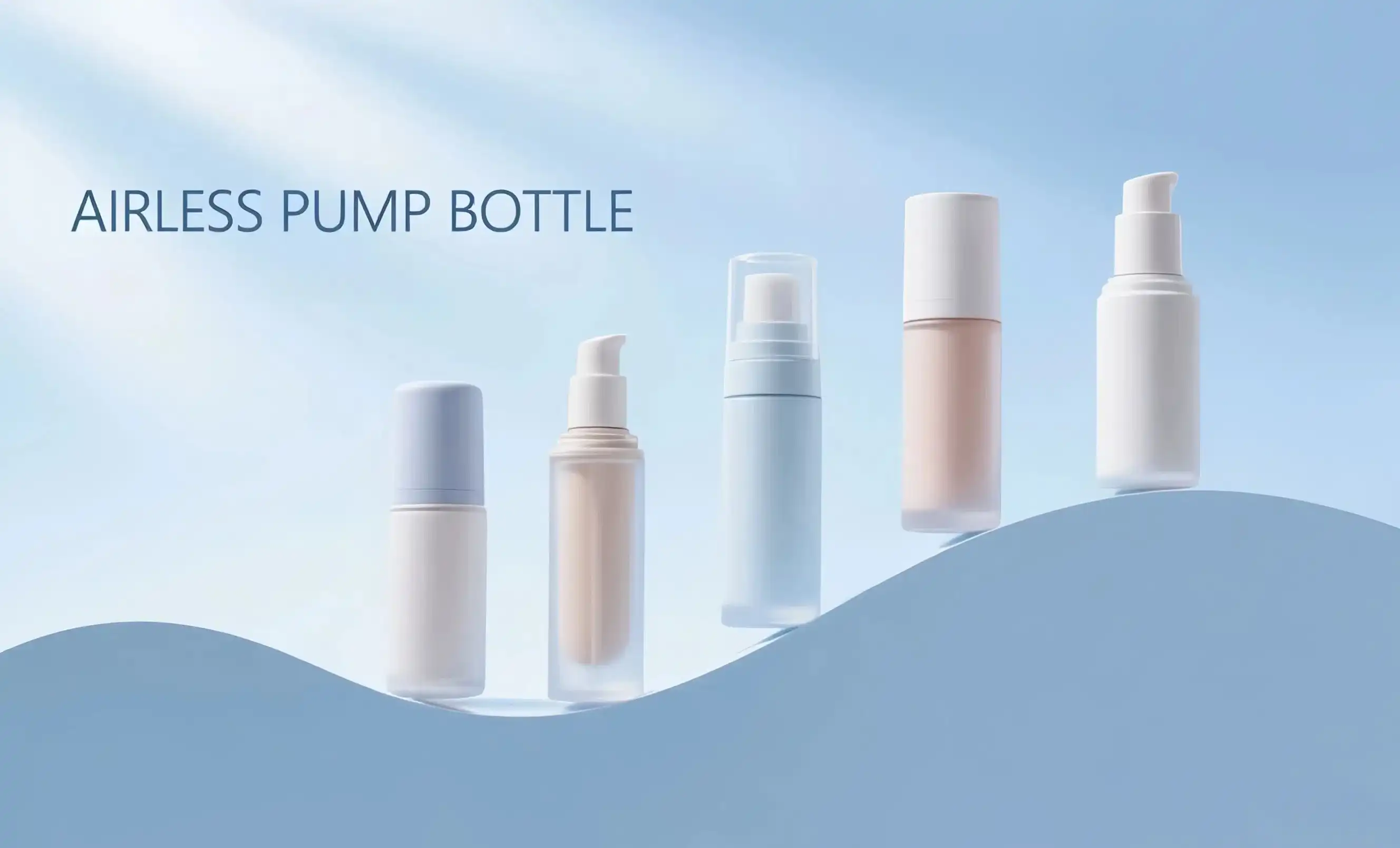
Designing Minimalist Sustainable Packaging for Clean Beauty
A key component of both brand recognition and customer
preference in the dynamic clean beauty industry is environmentally friendly packaging. It’s not just a trend for product packaging to combine minimalism and sustainability; it shows that people want to support brands that share their morals and are more aware of the need to have less of an impact on the environment. Sustainable packaging in minimalist design for clean beauty products must strike a balance between aesthetics, practicality, and environmental friendliness. This method considers the whole packaging lifecycle, not just its aesthetics, from manufacturing to eventual disposal (see the Sustainable Packaging Coalition definition).
Designing packaging that serves to both safeguard the product and convey the brand’s eco-consciousness is no easy feat. In the clean beauty business, more and more people like simple, eco-friendly packaging, a direction also reflected in trade coverage of 2024–2025 beauty packaging trends favoring minimalism and “sophisticated simplicity” (CosmeticsDesign; Mintel). Because of that, both businesses and the environment gain. People are deciding what to buy based on a brand’s environmental philosophy more and more, with recent surveys showing strong preference and even a price premium for eco-minded choices (McKinsey 2025; Shorr 2025 Consumer Report). For many, the packaging is the first time they see these ideas in real life.
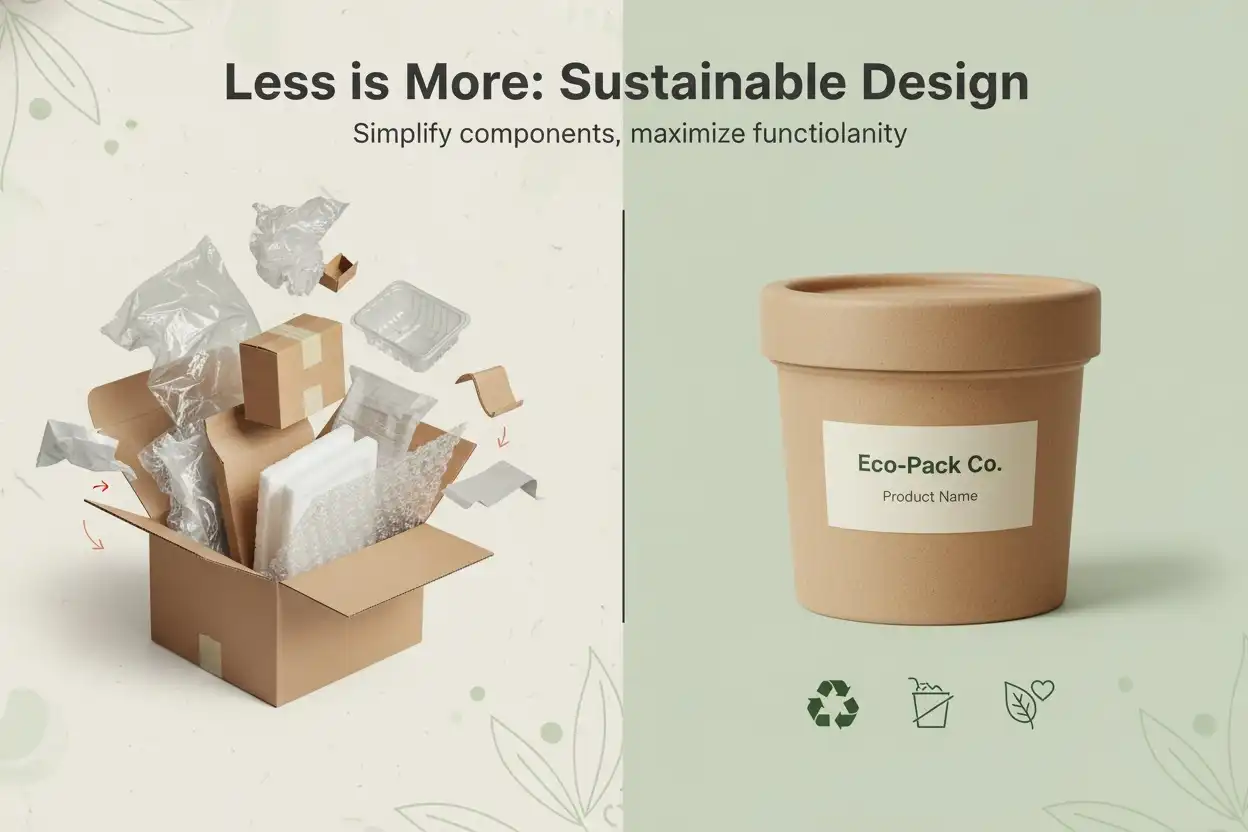
The “less is more” approach to sustainable design
The philosophy of “less is more” in sustainable packaging design is rooted in the idea that simplicity can be both beautiful and functional. Getting rid of parts that aren’t needed, using few materials, and making packaging that works but doesn’t stand out are all important parts of this method. Cutting down on production costs and environmental damage is the goal, but the quality or identity of the product should not change. Industry guidance stresses trade-offs and whole-lifecycle thinking rather than single-attribute claims (SPC update overview).
Simplifying packaging components One of the key aspects of minimalist sustainable design is simplifying packaging components. What this could mean is:
- Eliminating secondary packaging where possible
- Reducing the number of materials used in a single package
- Opting for mono-material designs that are easier to recycle
- Using customizable packaging solutions that adapt to different product lines without requiring entirely new designs
Packaging parts can be made much simpler so that brands use a lot less material and make the process go faster. It saves money and is better for the environment to make and throw away things this way.
Maximizing functionality with minimal design Minimalist sustainable packaging doesn’t mean compromising on functionality. Better solutions that benefit the user are often the result. As an example:
- Airless pump bottles that dispense product efficiently while minimizing air exposure
- Refillable containers that reduce the need for new packaging with each purchase (context on refill systems)
- Dual-purpose packaging that can be repurposed after the product is used
These solutions demonstrate that minimalist design can actually improve product performance and longevity, aligning perfectly with the clean beauty ethos of quality and sustainability. Independent explainers and supplier data note that airless systems help reduce oxidation and contamination, supporting formula stability (Compax).
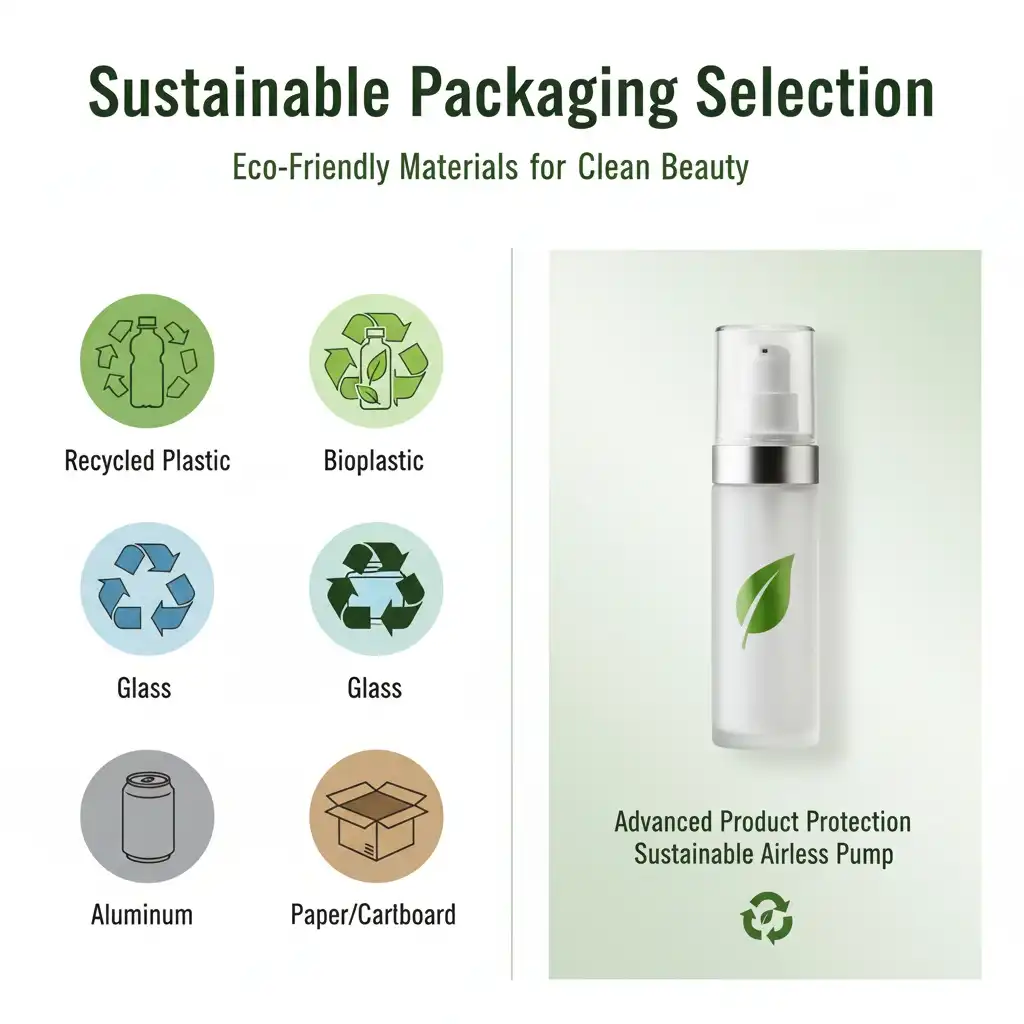
A guide to selecting simple yet impactful packaging materials
Choosing the right materials is crucial in designing minimalist sustainable packaging for clean beauty products. Environmental impact, product compatibility, and customer expectations must all be taken into account during the selection process. Here is a list to help you make this hard choice:
Evaluating eco-friendly material options When selecting materials for sustainable packaging, consider these options:
- Recycled plastics: PCR (post-consumer recycled) materials reduce the demand for virgin plastics
- Bioplastics: Made from renewable resources, these can be biodegradable or compostable
- Glass: Infinitely recyclable and perceived as premium
- Aluminum: Highly recyclable and provides excellent product protection
- Paper and cardboard: Renewable, biodegradable, and easily recyclable
Each material has its pros and cons, and the choice often depends on the specific product requirements and brand positioning. For instance, while glass offers a premium feel and is highly recyclable, it may not be suitable for all product types due to its weight and fragility. Life-cycle assessments show why substrate and format choices should be compared across the whole system (2024 LCA meta-analysis).
Balancing sustainability with product protection While sustainability is a key factor, the primary function of packaging is to protect the product. This usually entails making sure the natural components of clean beauty products don’t lose their efficacy. Take these things into account:
- Barrier properties: Some sustainable materials may not provide adequate protection against light, air, or moisture
- Compatibility: Ensure the packaging material doesn’t react with the product ingredients
- Durability: The packaging should withstand handling and transportation without damage
Topfeelpack’s advanced airless bottles are an excellent example of balancing sustainability with product protection. Because these containers prevent the product from coming into contact with air, they are ideal for natural cosmetics since they extend the product’s shelf life and maintain its efficacy (industry explainer). With over 14 years of packaging experience and fast customization lead times of 30–45 days, Topfeelpack supports efficient, brand-ready solutions.
How can Topfeelpack’s minimalist designs align with your clean beauty brand?
The eco-friendly, aesthetically pleasing, and practically sound packaging solutions offered by Topfeelpack are ideal for clean beauty brands. Here’s how their designs can align with and elevate your brand:
Customization that reflects your brand identity Topfeelpack understands that each clean beauty brand has a unique identity and target audience. With their adaptable packaging options, companies can:
- Create exclusive bottle shapes that stand out on the shelf
- Implement special processes like gradient spraying or silk screen printing for a distinctive look
- Adapt designs quickly to meet changing market trends or product lines
This level of customization ensures that your packaging not only aligns with your brand image but also resonates with your specific customer base, from high-end skincare to trendy makeup. Explore hero formats like the PA117 square airless bottle, the TU01 airless tube, or airless jar packaging that pairs well with minimalist graphics.
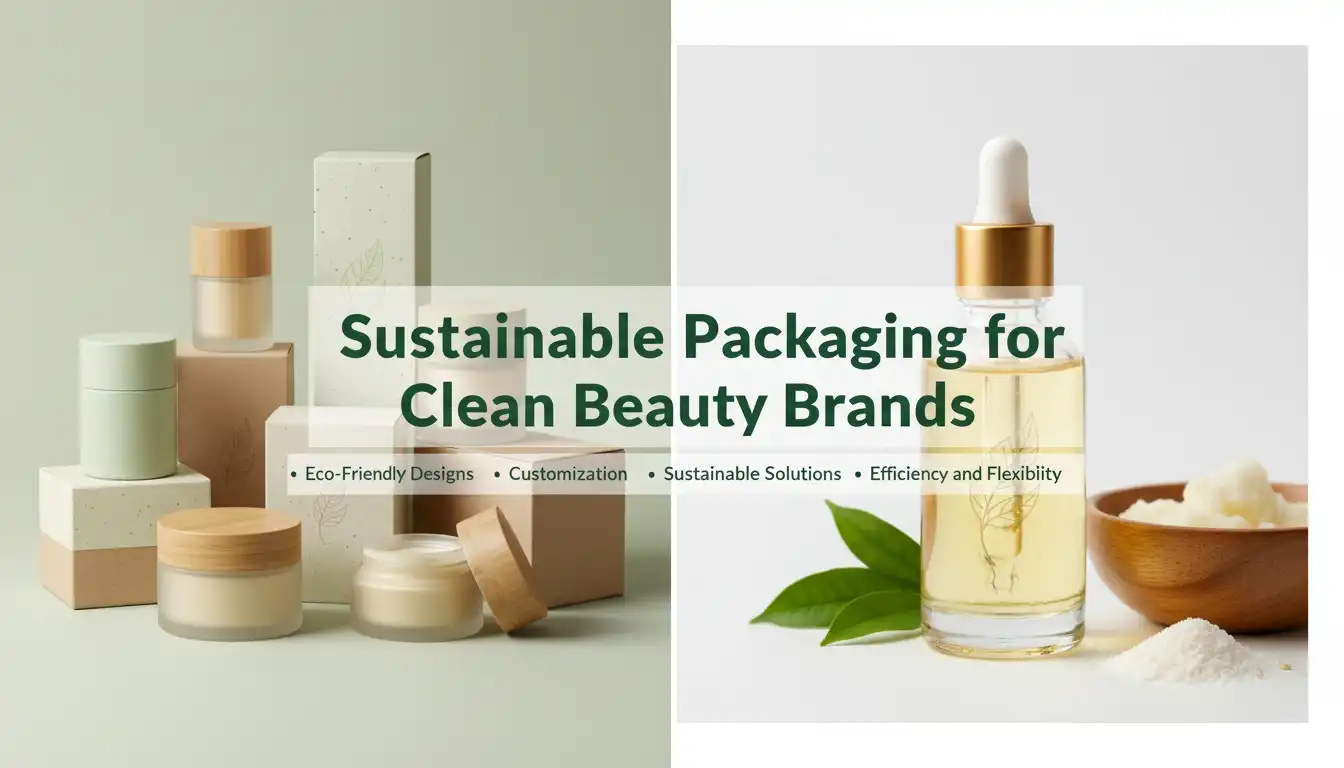
Sustainable solutions that meet industry standards Topfeelpack is devoted to sustainability in more ways than one. Their packaging solutions are designed to:
- Align with applicable EU chemical safety and labeling frameworks (e.g., ECHA CLP labeling/packaging) and U.S. FDA cosmetic labeling guidance
- Offer options for recycled plastics (PCR) and other sustainable materials
- Provide documentation such as COA and MSDS for transparency
This comprehensive approach to sustainable packaging ensures that your packaging not only looks good but also meets the increasing consumer demand for environmentally responsible products.
Efficiency and flexibility in production For clean beauty brands, especially those in the fast-paced DTC market, speed and flexibility in packaging production are crucial. Topfeelpack offers:
- Quick proofing within 7–15 days
- Fast customization with new products delivered in 30–45 days
- Flexible minimum order quantities to accommodate various brand sizes and needs
This agility in production allows brands to respond quickly to market trends and consumer preferences, a significant advantage in the competitive clean beauty industry. For mono-material one-click recycling stories, see PA06 mono-material PP airless or explore dual-phase concepts like the powder-mix airless format.
Last but not least, it is an art form to combine environmental consciousness with minimalist design to create sustainable packaging that radiates natural beauty. Everything from materials to design to brand harmony needs to be thought out thoroughly. The importance of sustainable packaging in expressing brand values and satisfying consumer expectations is being more acknowledged in the clean beauty industry (McKinsey Beauty 2025).
Topfeelpack offers innovative packaging solutions to meet the demands of modern clean beauty consumers, so if your brand is looking to elevate its packaging game, they can help. Companies looking to make a packaging statement will find the ideal partner in them due to their innovative airless bottles, dedication to sustainability, and customizable options.
Is your clean beauty packaging ready for a redesign with eco-friendly, minimal designs? Contact Topfeelpack today at [email protected] to find out more about how their flexible packaging options can fit with the goals and values of your business. If you’re a skincare innovator, a trendsetting makeup brand, or a DTC beauty disruptor, Topfeelpack has the expertise and capabilities to bring your packaging vision to life – sustainably and beautifully.
References
- From the experts: 2024 beauty packaging trends include minimalism, sustainability, and “sophisticated simplicity” – https://www.cosmeticsdesign.com/Article/2024/09/17/minimalism-in-beauty-packaging-a-strategic-shift-for-brands/
- Global Beauty Packaging Trends (Mintel) – https://www.mintel.com/insights/beauty-and-personal-care/global-beauty-packaging-trends/
- Do US consumers care about sustainable packaging in 2025? (McKinsey) – https://www.mckinsey.com/industries/packaging-and-paper/our-insights/do-us-consumers-care-about-sustainable-packaging-in-2025
- 2025 Sustainable Packaging Consumer Report (Shorr) – https://www.shorr.com/resources/blog/sustainable-packaging-consumer-report/
- SPC: Definition of Sustainable Packaging (PDF) – https://sustainablepackaging.org/wp-content/uploads/2024/01/SPC_Definition-of-Sust-Packaging_Landscape.pdf
- ECHA CLP: Labelling & Packaging requirements – https://echa.europa.eu/regulations/clp/labelling
- FDA Cosmetics Labeling Guide – https://www.fda.gov/cosmetics/cosmetics-labeling-regulations/cosmetics-labeling-guide
- U.S. Plastics Pact: Why Use PCR? – https://usplasticspact.org/why-use-pcr/
- Life-cycle assessment of packaging systems: meta-analysis (2024) – https://www.sciencedirect.com/science/article/pii/S0959652624032347
- Airless bottle: what it is and how it works (Eurovetrocap) – https://www.eurovetrocap.com/en/airless-bottle-what-it-is-and-how-it-works/
- Fact vs Fiction: Airless Pump Bottle (Compax) – https://compaxpackaging.com/airless-pump-bottle/
- Refillable beauty: adoption considerations (Vogue Business) – https://www.voguebusiness.com/beauty/refillable-beauty-problems-and-why-brands-need-to-think-twice

Looking for quality cosmetic packaging? Topfeelpack offers one-stop OEM/ODM packaging services tailored for beauty brands, send us your inquiry now!
 - 副本_1745399213966.webp)
TOPFEELPACK CO., LTD
_1747827716538.webp)