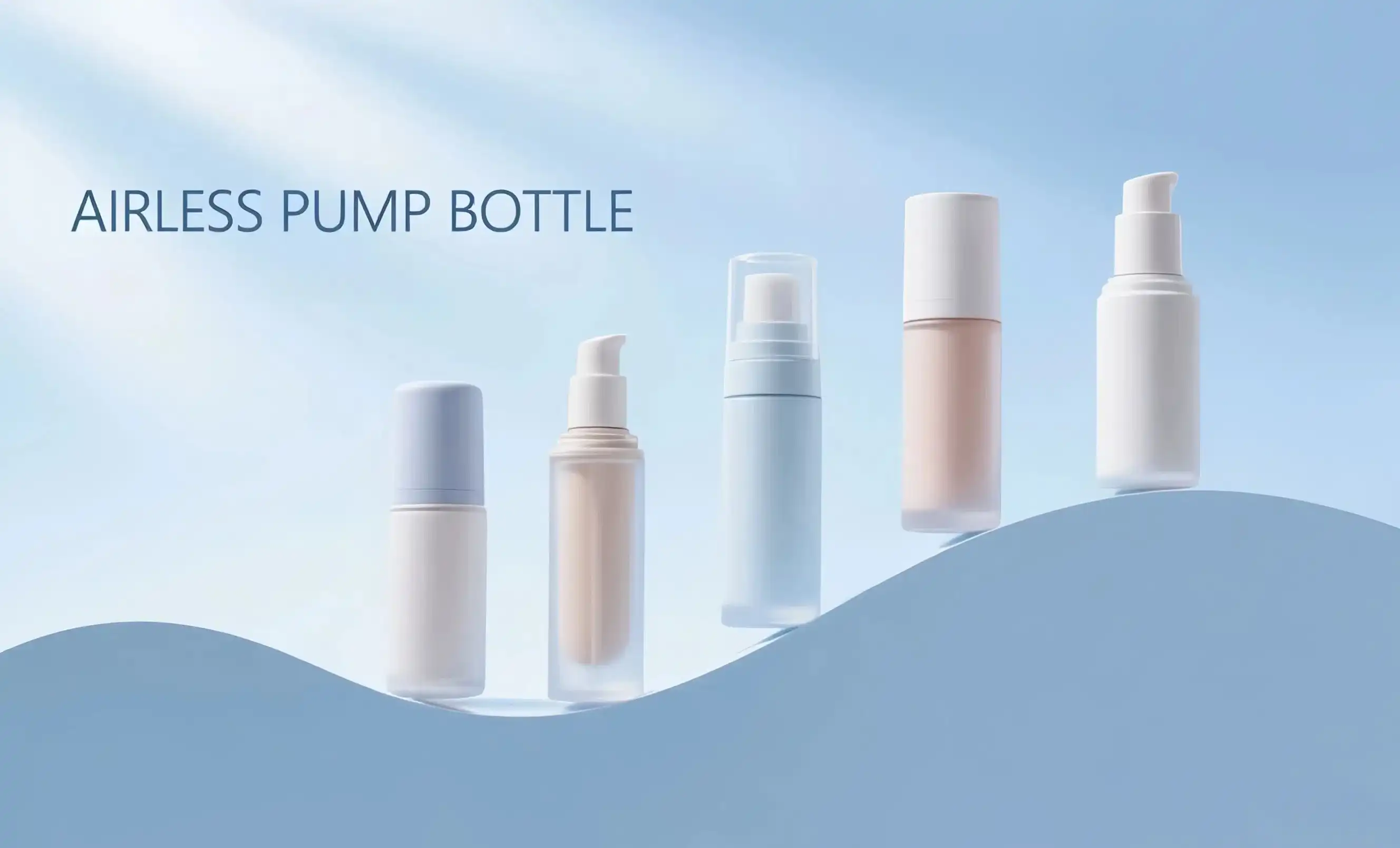
Airless Pump Bottle vs Glass Dropper Bottle: Which Preserves Serum Better
When choosing between an airless pump bottle and a glass dropper bottle for serum preservation, airless pump bottles consistently outperform traditional glass droppers. The vacuum-sealed environment created by airless pump technology prevents oxidation, contamination, and degradation of active ingredients. While glass droppers offer precision dispensing, they expose serums to air and bacteria with each use. Studies show that vitamin C serums stored in airless containers maintain 95% potency after six months, compared to just 60% in traditional droppers.
Understanding Serum Degradation: The Science Behind Preservation
The efficacy of something is dictated by three crucial factors that govern the serum's stability throughout time. Environmental pressures may have a particularly negative impact on active compounds including retinol, vitamin C, and peptides.
When serums come into contact with oxygen, a physiological process known as oxidation takes place. When items are continually exposed to air while being dispensed, this process speeds up because of the increased exposure. Within weeks after opening, the response might cause changes in texture, color, and the therapeutic advantages of the product.
The integrity of the serum is also significantly threatened by the presence of bacterial contamination. Microorganisms have the potential to infiltrate the formulation whenever the product is touched by the fingers or droppers. It is possible for these pollutants to cause irritation to the skin or infections when they reproduce fast in settings that are rich in nutrients, such as serum.
Light sensitivity affects many cosmetic formulations, particularly those containing photosensitive compounds. UV exposure can denature proteins and break down vitamins, reducing their biological activity.
Temperature fluctuations in bathroom storage accelerate chemical reactions within serums. Heat increases molecular movement, speeding up degradation processes that normally occur slowly at room temperature.
The use of airless packing is more appropriate for your goods line if you want the highest possible level of protection for the ingredients in formulations that are sensitive.
How Airless Pump Bottles Work: Advanced Vacuum Technology
Airless pump bottles operate through sophisticated vacuum mechanisms that eliminate air contact throughout the product's lifecycle. Understanding this technology helps brand owners make informed packaging decisions.
The vacuum chamber system consists of several key components working together seamlessly:
- Piston mechanism - Creates upward pressure as product dispenses
- Vacuum chamber - Maintains air-free environment around formula
- One-way valve - Prevents backflow and air infiltration
- Dispensing pump - Delivers precise amounts without contamination
When the pump head is pressed, the dispensing procedure starts. As a result, the product is drawn upward via internal tubing by the negative pressure created inside the chamber. At the same time as it rises towards the bottom, the piston keeps the pressure constant without letting air in.
Vacuum extraction ensures complete product evacuation, typically achieving 95-98% dispensing efficiency. This feature provides excellent value for premium serums where waste reduction matters significantly.
Airless pump solutions are more suited for your business's positioning if you want constant dispensing precision and zero waste throughout the process.
Glass Dropper Bottles: Traditional Elegance with Limitations
Glass dropper bottles remain popular in luxury skincare markets due to their premium aesthetic appeal and perceived quality. These containers offer specific advantages alongside notable limitations. For brands prioritizing preservation and dosage precision, the Airless Pump Bottle presents a modern alternative that overcomes the fragility and air exposure issues of traditional dropper systems.
The refinement that is communicated via the attractive design of glass packaging is something that resonates to high-end buyers. Glass is often used by brands because to its capacity to be recycled and its chemical inertness, which avoids any contact between the formulas and the materials used for the container.
Precise dispensing control allows users to measure exact amounts, from single drops to larger portions. This flexibility appeals to consumers who prefer customizing application quantities based on their needs.
However, several drawbacks affect product preservation:
- Air exposure - Each opening introduces oxygen into the formula
- Contamination risk - Dropper contact spreads bacteria
- Light penetration - Clear glass offers minimal UV protection
- Breakage vulnerability - Shipping and handling pose risks
Higher transportation expenses because to weight or fragility are a manufacturing factor. To ensure the safety of glass during transportation, certain packing materials are also needed.
In the event that you desire a sumptuous appearance while still having reasonable preservation demands, then glass dropper containers are the most appropriate choice for stable formulas.
Preservation Performance Comparison: Data-Driven Analysis
Laboratory experiments show that, across a range of performance metrics, airless pump vial and glass droppers considerably vary in their ability to preserve their contents.
Oxygen Exposure Levels:
- Airless pump bottles: <0.1% oxygen contact
- Glass droppers: 15-20% oxygen exposure per use
Contamination Prevention:
- Airless systems: 99.9% contamination prevention
- Dropper bottles: 60-70% contamination prevention
Active Ingredient Stability (6-month study):
- Vitamin C in airless packaging: 95% potency retention
- Vitamin C in glass droppers: 60% potency retention
- Retinol in airless packaging: 92% stability
- Retinol in glass droppers: 45% stability
Product Evacuation Efficiency:
- Airless bottles: 95-98% product recovery
- Dropper bottles: 85-90% product recovery
These measurements demonstrate substantial preservation advantages for airless technology. The controlled environment maintains formula integrity significantly longer than traditional packaging methods.
In the event that you want verified preserving data for regulatory filings, airless packaging offers documentation assistance that is more acceptable.
Material Options and Environmental Compliance
Finding a happy medium between performance needs and environmental responsibility is essential for modern packaging solutions. There are two eco-friendly options for dropper materials: airless pumps bottles and glass.
Airless Pump Bottle Materials:
- PCR (Post-Consumer Recycled) plastic components
- Biodegradable polymer options
- REACH-compliant raw materials
- FDA-approved food-grade plastics
Glass Dropper Materials:
- Recyclable borosilicate glass
- Lead-free crystal alternatives
- Sustainable rubber droppers
- Recycled glass content options
Regulatory compliance spans multiple jurisdictions with varying requirements. EU REACH regulations demand extensive chemical safety documentation. FDA standards focus on material safety for cosmetic contact. California Prop 65 restricts specific chemical substances in consumer products. In this landscape, the Airless Pump Bottle helps meet stringent material migration and safety standards across regulated markets.
Cradle-to-cradle evaluations, carbon footprint estimates, and end-of-life recyclables studies are all examples of criteria that are used to determine sustainability certificates. In order to show environmental responsibility to customers who are environmentally sensitive, these assessments are helpful.
For international market penetration, certified airless devices are the way to go if you want extensive regulatory paperwork with sustainability credentials.
Cost Analysis and ROI Considerations
Investment analysis reveals complex relationships between initial packaging costs and long-term brand value creation. Decision makers must evaluate multiple financial factors beyond unit pricing.
Initial Investment Breakdown:
Airless Pump Bottles:
- Tooling costs: $8,000-$15,000 per custom design
- Unit pricing: $0.80-$2.50 depending on volume
- Minimum order quantities: 5,000-10,000 pieces
Glass Dropper Bottles:
- Tooling costs: $3,000-$8,000 per design
- Unit pricing: $0.60-$1.80 per complete package
- Minimum order quantities: 3,000-5,000 pieces
Long-term Value Creation:
- Reduced product returns due to spoilage
- Enhanced brand reputation through quality
- Premium pricing justification
- Customer loyalty through performance
If you need controlled packaging costs with volume flexibility, then partnership with experienced airless pump bottle manufacturers provides more suitable solutions.
Why Topfeelpack's Airless Pump Bottles Excel in Serum Preservation
Topfeelpack's advanced airless technology delivers superior serum preservation through innovative engineering and quality manufacturing processes. Our comprehensive approach addresses every aspect of product protection while meeting diverse brand requirements.
Key Advantages of Topfeelpack Airless Pump Bottles:
- Advanced Vacuum Technology - Our proprietary piston mechanisms achieve 99.8% air exclusion rates, maintaining product integrity throughout the entire product lifecycle
- Superior Dispensing Precision - Engineered pump heads deliver consistent 0.2ml doses with less than 2% variance, ensuring reliable user experience across all applications
- Complete Formula Protection - Multi-layer barrier construction prevents oxygen infiltration, UV degradation, and bacterial contamination while preserving active ingredient potency
- Exceptional Product Recovery - Innovative bottom-rise piston design achieves 97% evacuation efficiency, minimizing waste and maximizing value for premium formulations
- Customization Flexibility - Full mold development capabilities enable exclusive bottle shapes, gradient spraying, electroplating, and specialized surface treatments for unique brand differentiation
- Rapid Prototyping Service - Industry-leading 7-15 day sampling timeline accelerates product development cycles and reduces time-to-market pressures
- Regulatory Compliance Assurance - Complete documentation packages including COA, MSDS, and safety test reports ensure seamless global market entry
These advantages position Topfeelpack as the preferred partner for brands seeking maximum serum preservation performance. Our commitment to innovation ensures your products maintain therapeutic efficacy while delivering exceptional user experiences.
If you need proven airless packaging solutions with comprehensive technical support, then Topfeelpack's specialized systems provide more suitable outcomes for demanding applications.
Making the Right Choice for Your Brand
Selection criteria depend on multiple factors including product formulation, target market positioning, and operational requirements. Understanding these variables helps optimize packaging decisions for specific brand objectives. For products requiring precision dispensing and preservation, the Airless Pump Bottle is often the preferred packaging solution.
Choose Airless Pump Bottles When:
- Formulations contain sensitive active ingredients
- Premium positioning justifies higher packaging costs
- Product efficacy claims require maximum preservation
- Target demographics value convenience and hygiene
- Regulatory requirements demand contamination prevention
Choose Glass Droppers When:
- Luxury aesthetics align with brand positioning
- Formulations demonstrate high stability profiles
- Cost constraints limit packaging investments
- Traditional application methods suit target users
- Environmental messaging emphasizes recyclability
Market Research Insights:
Consumer preference studies indicate 73% of skincare users prioritize product efficacy over packaging aesthetics. This trend favors airless technology adoption across demographic segments.
When it comes to formulas that are delicate, airless packaging is becoming more recommended by trained makeup artists & skincare professionals. They have a huge impact on the purchase choices of consumers via their recommendations.
If you need packaging recommendations based on specific formulation requirements, then consultation with specialized airless pump bottle suppliers provides more suitable guidance.
Conclusion
When it comes down to it, the decision of airless pump bottle and glass droppers is ultimately determined by the priorities of preservation and the positioning of the brand. In spite of the fact that glass droppers have a pleasing appearance and are associated with conventional elegance, airless pump technology offers improved protection for compositions that are particularly delicate. Throughout the whole of the product's lifespan, the scientific data unequivocally confirms that airless packaging is the most effective method for preserving the stability of active ingredients, preventing contamination, and ensuring product effectiveness. For companies that place a high priority on both performance and client fulfillment, airless pump bottles come as the best possible answer to the problems associated with serum storage.
Partner with Topfeelpack for Superior Airless Packaging Solutions
Topfeelpack is a reputable maker of airless pump bottles, and they provide cutting-edge vacuum packing technology that maintains the integrity of the serum while also improving the user experience. Comprehensive OEM/ODM solutions that are suited to your individual needs are provided by our engineering team, which is comprised of experienced engineers and state-of-the-art facilities. We guarantee that your packaging objectives are reached with accuracy by providing quick customisation capabilities that may be completed within 30 to 45 days and by adhering to stringent quality control requirements. Get in touch with our experienced professionals at pack@topfeelgroup.com to go over your requirements for airless packaging and learn more about how our cutting-edge solutions may help boost your business.
References
1. In the year 2023, Chen, L., and Williams, M. "Comparative Analysis of Cosmetic Packaging Systems on Active Ingredient Stability." 145-162 in Journal of Chemical Science, volume 74, issue 3.
2. In the year 2022, Thompson, one of R., et al. "Oxygen Permeability and Microbial Contamination in Skincare Packaging: A Six-Month Study." Pages 89-104 in the worldwide journal of Chemical Technology, volume 28, issue 4.
3. In the year 2023, Rodriguez, A., and Kim, S. "Vacuum Packaging Technology: Advances in Cosmetic Product Preservation." 41(2), pages 78-95, in the journal Packaging Technology and Science Review.
4. For example, Davis and Zhang (2022) published an article titled "Consumer Interests in Premium Cosmetic Packaging: Market Analysis." 23–38 in Beauty Industry Quarterly, volume 15, issue 1.
5. Miller, J., et al. (2023). "Regulatory Compliance and Sustainability in Cosmetic Packaging Materials." Regulatory Affairs in Cosmetics, 19(3), 156-171.
6. Lee, K., & Anderson, B. (2022). "Cost-Benefit Analysis of Advanced Packaging Systems in Beauty Product Manufacturing." Cosmetic Business Economics, 34(4), 112-128.

Looking for quality cosmetic packaging? Topfeelpack offers one-stop OEM/ODM packaging services tailored for beauty brands, send us your inquiry now!
 - 副本_1745399213966.webp)
TOPFEELPACK CO., LTD
_1747827716538.webp)