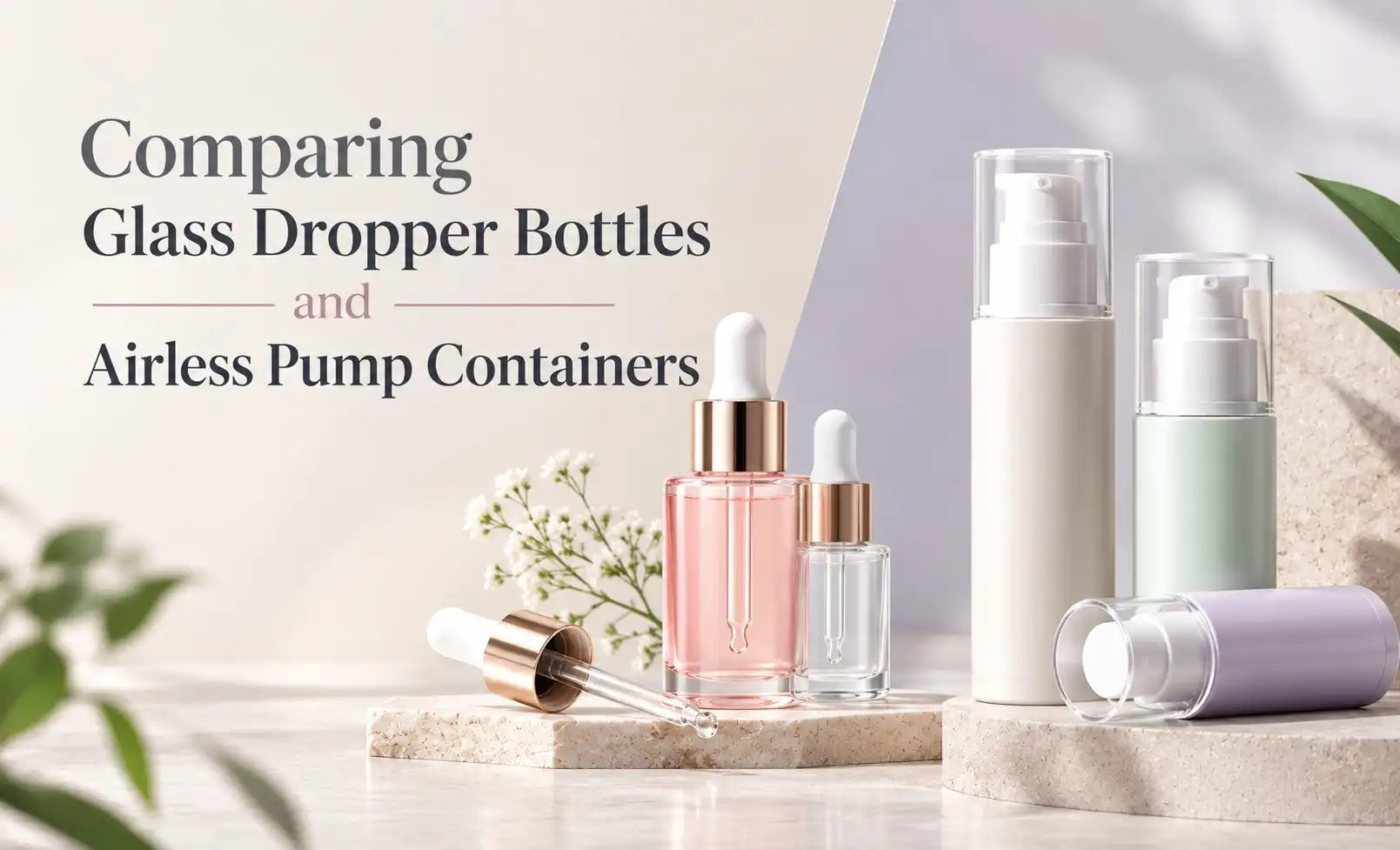
Comparing Glass Dropper Bottles and Airless Pump Containers
A procurement team’s choice of dispensing packaging for skincare, cosmetics or functional beauty formulas is critical and one of the most important choices they will make. Should they choose glass dropper bottles or airless pump containers? Glass droppers are perfect for precision drop-by-drop distribution, making them great for serums, face oils and actives. Conversely, oxygen-sensitive formulations in vacuum-driven airless pump containers are protected against deterioration. Both formats provide unique benefits in terms of cost, compliance, sustainability and user experience – and knowing these trade-offs directly affects product integrity and brand image in competitive U.S. marketplaces.
Understanding Glass Dropper Bottles and Airless Pump Containers
What Makes Glass Dropper Bottles Distinctive?
Glass dropper bottles have long been the mainstay of administering medications and cosmetics. These are produced from borosilicate or soda-lime glass, which are chemically inert, meaning the wall of the container will not leach chemicals into delicate preparations like vitamin C serums or retinol oils. They come in amber, cobalt blue or transparent. UV rays are blocked by amber glass, which is a benefit for light-degradable compounds. Typically, dropper units come with graded pipette tips linked to silicone or rubber bulbs. This allows for precise titrations with one drop.
How Airless Pump Technology Works
Airless pump containers use a piston or cushion that raises when product is dispensed. This removes headspace and prevents oxidation. Antioxidation is one of the main reasons why the active ingredients in leave-on skin care products break down, according to a study published in the International Journal of Cosmetic Science. No matter how much product is left, airless systems give the same dose and keep germs out. They also make the product last longer without adding extra preservatives. This makes them the best choice for high-end lotions, peptide serums, and creams that are high in antioxidants.
Core Functional Comparison: Glass Dropper Bottles vs. Airless Pump Containers
The people who work in procurement need a way to make decisions that is based on real performance criteria, not just personal taste. Here are the main practical aspects that you should compare:
- Chemical Compatibility: Glass dropper bottles are fully inert and compatible with acidic, alkaline, and solvent-based formulations. Airless pumps use PP or PETG inner components that may require compatibility testing with high-concentration actives.
- Dosing Accuracy: Dropper assemblies allow single-drop precision, well-suited to facial oils, elixirs, and high-potency concentrates. Airless pumps deliver metered doses per stroke, which benefits creams and emulsions but limits ultra-fine titration.
- Contamination Prevention: Airless systems outperform open dropper bottles when bacterial contamination risk is a concern, particularly for preservative-free formulations.
- Durability and Breakage Risk: Glass dropper bottles carry inherent fragility risk during shipping and retail handling. Airless pump containers — typically constructed from HDPE, PP, or PETG — tolerate drops and transit stress with far greater resilience.
- Sustainability Profile: Glass is infinitely recyclable and widely accepted through U.S. curbside programs. PCR-integrated airless pumps now offer a competitive eco-credential when glass weight or breakage risk is prohibitive.
These factors can be used to make a diagnosis. Amber glass dropper bottles are best for a brand that is putting out a vitamin C brightening serum with light-sensitive ingredients. A direct-to-consumer moisturizer that says to be preservative-free can use an airless pump bottle made of PETG and parts that are compatible with PCR.
Procurement Insights and Market Options for B2B Buyers
Supplier Certifications and Compliance Documentation
Businesses that want to sell to other businesses in the U.S. must make sure that package sources give them a COA (Certificate of Analysis), MSDS paperwork, and proof that they follow FDA rules, EU REACH guidelines, and California Proposition 65. It is very important to know whether a glass dropper bottle is USP Type I or Type III glass when it comes to medicinal uses. Containers that don't have air holes usually come with material declarations that say they don't have any heavy metals or BPA in them.
Customization Capabilities That Drive Brand Differentiation
Top packing companies can open molds to make bottles in a variety of forms. The bottles can then be decorated with different types of painting, hot pressing, silk-screen printing, and gilding. People who own brands can directly put strategy into the package with these features, whether it's scientific and simple or high-end and literary. Topfeelpack has modern factories that can make OEM and ODM changes to both glass dropper forms and airless pump containers. You can get new goods in 30 to 45 days, and return buys can get them quickly in 3 to 5 weeks. There are different minimum order amounts at Topfeelpack, and samples can be sent out quickly for direct-to-consumer brands with short product launch cycles. This takes care of one of the main issues new brands face when they try to buy things.
Practical Usage and Maintenance of Glass Dropper Bottles
Best Practices for Filling and Storage
Even amber glass can only let through a certain amount of light above 450nm. Because of this, glass dropper bottles work best when they are kept out of the sun and filled at controlled temperatures. Filling lines should use nitrogen blanket methods for recipes that won't stand up to oxidation.
Cleaning Protocols for Reuse and Sustainability
When glass dropper bottles are part of a program that encourages refilling or going green, the way they are cleaned is important. Rinse with 70% isopropyl alcohol, let dry completely in the air before putting back together, and switch out drip parts every time you refill the bottle. After plastic or rubber parts are separated, glass parts like the bottle body and cap ring can be recycled in the usual way. This is in line with what more and more U.S. customers want: take-back and refill plans for high-end beauty products.
Choosing the Right Container: Size, Material, and Feature Considerations
There are five different factors that buying teams should think about in order to choose the best format:
- Material Type: Borosilicate glass for pharmaceutical-grade purity; soda-lime glass for cost-effective cosmetic applications; PP or PETG airless bodies for impact resistance and PCR integration.
- Dropper Bulb Technology: Silicone bulbs for chemical resistance; rubber bulbs for standard applications; tamper-evident pipette tips for clinical or sensitive formats.
- Size Configuration: Glass dropper bottles most commonly range from 5ml to 100ml for serums and facial oils; airless pump containers span 15ml to 200ml for emulsions and creams.
- Safety Features: Child-resistant caps, tamper-evident closures, and locking pump heads add compliance value for regulated markets.
- Environmental Impact: Glass is infinitely recyclable; PCR-integrated airless containers reduce virgin plastic consumption, supporting brand sustainability commitments.
Impact on the Environment: Glass can be recycled over and over again, and PCR-integrated airless containers cut down on the use of new plastic, which supports brands' sustainability goals.
Conclusion
Glass dropper bottles and airless pump containers are both valid and valuable types of modern makeup and skincare packing. The best choice depends on the chemistry of the formulation, how the brand is positioned, how the product will be distributed, and any commitments to sustainability. For precise dosing and chemical inertness with sensitive actives, glass dropper bottles continue to be the best option. When you use a product for its whole life, airless pump containers keep the formula's integrity by preventing contamination and ensuring consistent dosing. A strict procurement process that looks at things like material certifications, the ability to customize, and the dependability of the provider always leads to better results than just choosing the style you want.
FAQ
1. Are glass dropper bottles compatible with all skincare formulations?
High-acid serums, plant oils, and retinol concentrates are just a few of the many cosmetic and skincare products that work well in glass dropper bottles. Silicone bulb droppers make it possible to use more aggressive chemicals. Before finalizing specs, you should always ask your supplier for a COA that confirms the type of glass and the material makeup of the bulb.
2. When should I choose an airless pump over a dropper format?
When it comes to cream or gel textures, preservative-free formulas, and goods where constant per-dose delivery is more important than drop-level accuracy, airless pump containers are the better choice. They work best with antioxidant serums, peptide moisturizers, and any other product whose shelf life is significantly shortened by oxidation.
3. Can I get small-batch custom printing on glass dropper bottles?
Yes. Reliable suppliers, such as Topfeelpack, can print on glass dropper bottles with silk screens, hot stamps, and frosted finishes. They also have flexible minimum order quantities that make them perfect for launching new direct-to-consumer brands and adding new products to existing lines. Proofs are usually ready between 7 and 15 days for standard customization requests.
4. What compliance documents should I request from a packaging supplier?
Ask for a COA (Certificate of Analysis), an MSDS, FDA compliance statements, and proof that the product meets EU REACH and CA Prop 65 standards. If it applies to glass, ask for a USP glass type description.
Partner with Topfeelpack for Glass Dropper Bottles and Airless Packaging Solutions
Topfeelpack is a trusted company that makes glass dropper bottles and specializes in airless packing for cosmetic and grooming brands in the U.S. Our flexible solutions, which come with strict quality control, eco-friendly materials, and quick 30-to-45-day delivery of new products, are designed to keep your recipes safe and boost your brand's reputation. Call our team at [email protected] right now to get a custom price or sample pack.
References
1. Draelos, Z.D. (Ed.). Cosmetic Dermatology: Products and Procedures. Wiley-Blackwell, 2022.
2. Barel, A.O., Paye, M., & Maibach, H.I. (Eds.). Handbook of Cosmetic Science and Technology. CRC Press, 2014.
3. International Journal of Cosmetic Science — "Oxidative Stability and Packaging Interactions in Leave-On Skincare Formulations." Vol. 43, 2021.
4. United States Pharmacopeia (USP). USP–NF General Chapter <660>: Containers — Glass. USP, 2023.
5. European Chemicals Agency (ECHA). REACH Regulation Guidance for Cosmetic Packaging Suppliers. ECHA, 2022.
6. Packaging Digest. "Airless Packaging Growth in Premium Skincare: Market Trends and Material Innovation." Packaging Digest, 2023.

Looking for quality cosmetic packaging? Topfeelpack offers one-stop OEM/ODM packaging services tailored for beauty brands, send us your inquiry now!
 - 副本_1745399213966.webp)
TOPFEELPACK CO., LTD