How to Design Personalized Containers That Attract Buyers
It takes more than just good looks to make personalized containers that really get people to buy them. You have to find the perfect balance between material integrity, functional performance, and brand alignment. At every level of the beauty and products business, custom packaging has a direct effect on what people buy, from direct-to-consumer owners picking airless bottles to procurement managers finding large amounts of compliant materials. When done right, personalized containers show what the brand stands for before the product is even used. This book explains the main ideas, the step-by-step process, and the buying tactics that can help brands and sellers make packaging that sells.
Why Personalized Containers Matter in B2B Beauty Procurement?
The cosmetics packaging business will be valued more than $42 billion in five years (Grand View Research, 2022). It was valued at around $28.9 billion in 2022. “Packaging was a must-have but now it’s thought of as a key part of your business. Skincare businesses, cosmetic lines and direct-to-consumer enterprises are increasingly using bespoke packaging to make their items stand out on the market. The US market is quickly adopting green-friendly packaging that conforms to California Prop 65, FDA standards and EU REACH. A lot of firms obey the guidelines and then go one step further and ask for PCR (post-consumer recycled) plastics, glass and biodegradable materials because clients want beauty items that are healthy for the environment. You may also use custom containers to keep things secure. A research by Dotcom Distribution indicated 40% of consumers upload images of unusual parcels on social media. This expands the brand’s local reach. Beauty firms vying for the attention of shoppers on Amazon and Instagram find revenue declines when packaging receives this much attention.

Core Principles for Designing Custom Containers That Sell
Knowing how your buyer will use your design is the first step to making a good one. A serum needs to be precisely dosed, a mask needs to be easy to get to from a wide jar, and a travel-sized lotion needs to be safe from leaks. These needs affect choices about the type of container, how it will be closed, and the material that will be used. For personalized containers, understanding real usage habits is what separates packaging that merely looks good from packaging that actually sells.
When making high-converting packaging, keep these design rules in mind:
- Material chosen with compliance in mind: Glass is completely recyclable and offers a superior sensory experience. PCR plastics satisfy FDA and REACH regulations while having a less environmental impact. Material transparency is a must for companies aiming to attract customers interested in clean beauty.
- Surface finish and visual customization: Brands may produce visually unique packaging without the need for brand-new molds by using techniques including gradient spraying, UV-cured hot stamping, silk screen printing, and electroplating. These finishes indicate superior quality and support higher prices.
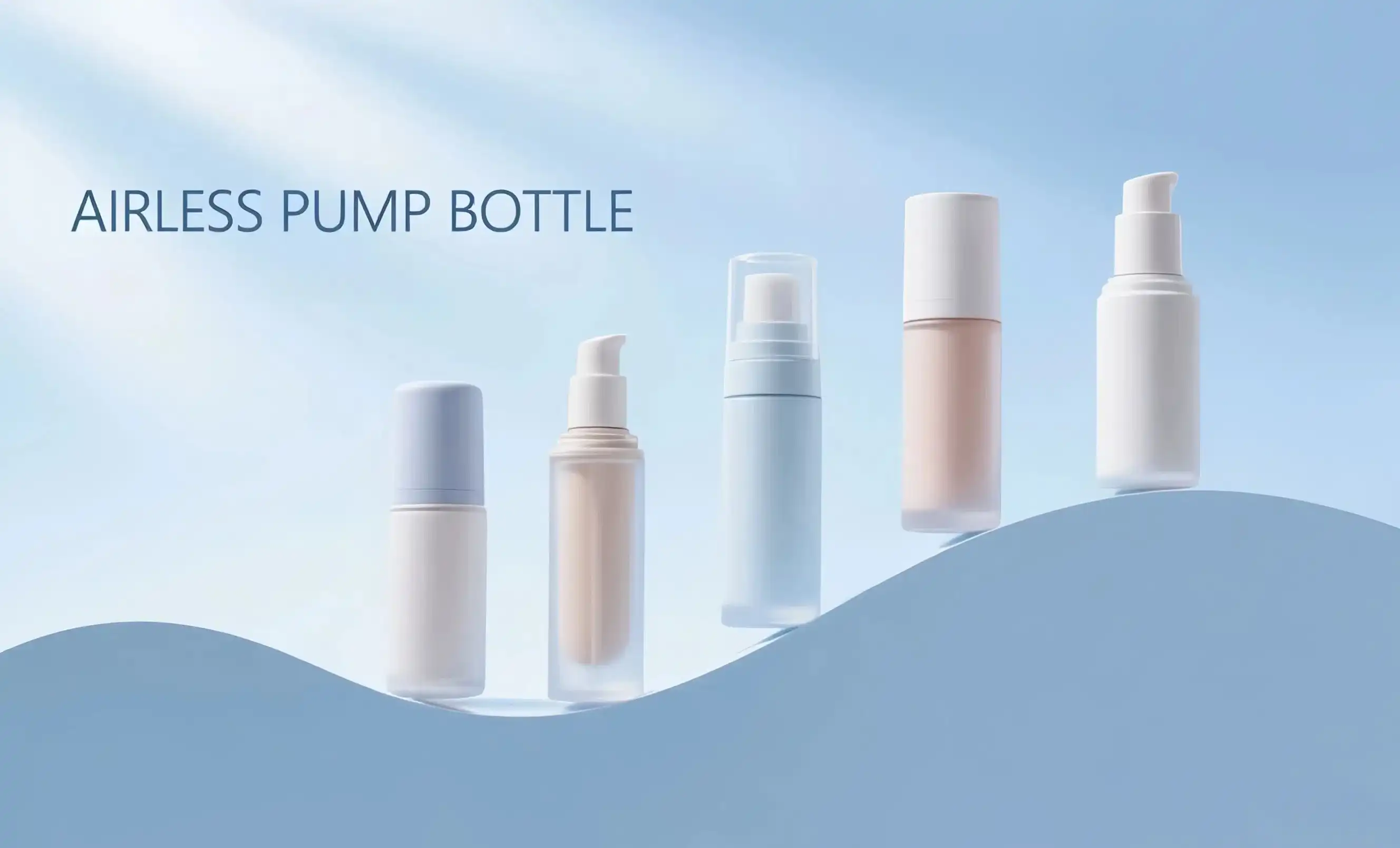
- Functional precision: Compared to conventional open-top packaging, airless pump technology extends product shelf life by up to 15% by preventing oxidation and microbiological contamination (Packaging Digest, 2021). For precise titration of serums and face oils, dropper containers must have calibrated tip holes.
- Ergonomic and structural design: The form of a container influences how customers use a product on a regular basis. Perceived quality and user pleasure may be influenced by a well-balanced bottle, a smooth pump travel, or a perfectly torqued top.
When these ideas are put together, they make packaging that meets both the useful requirements for buying things and the visual requirements of brands. When brands put money into this level of thoughtful design, customer trust goes up and return rates go down.
Step-by-Step Customization Process for Personalized Containers
A clear, structured method lowers the risk of development and makes sure that start dates are met. This is how a professional customizing process usually goes:
Step 1: List the functions that the product must do. Determine its viscosity, pH sensitivity, and likelihood of air exposure. These factors assist you in determining if a tube, dropper, pump jar, or airless bottle is the best option. For personalized containers, this step is essential — the right format protects the formula, supports accurate dosing and ensures the packaging performs as well as it looks.
Step 2: Collaborate with an expert manufacturer. Be careful to inform individuals about your target market, brand standards, and compliance requirements as soon as possible. A reputable supplier will be able to inform you about possible surface treatments, minimum order quantities, and mold capabilities.
Step 3: Make copies and review them. In seven to fifteen days, request actual samples. Verify the seal's integrity, the pump draw's consistency, the labels' adherence, and the drop test's success before permitting mass production.
Step 4: Verify the accuracy of the compliance documentation. Make that the supplier can provide the necessary COA, MSDS, and safety test reports before manufacturing begins. This is a requirement for brands that sell in the US and the EU.
Step 5: Monitor shipping and production timelines. Ensure that there are precise tolerances for color matching and size stability. Establish checkpoints at strategic locations to monitor development and prevent shipment delays.
This process goes a lot more quickly when you work with experienced manufacturers like Topfeelpack. You can get a new product in 30 to 45 days and a mass production shipment in 3 to 5 weeks.
Working with experienced manufacturers like Topfeelpack streamlines this process considerably, with new product delivery achievable in 30–45 days and mass production shipping within 3–5 weeks.
Personalized vs. Standard Containers: What Buyers Should Know
Off-the-shelf goods are initially speedier and less costly. They don't, however, always meet a brand's specific functional or esthetic needs and don't provide them a method to stand out in a crowded market.
Personalized containers provide measurable long-term benefits. They provide better formula protection, especially the airless models that prevent oxidation. They reinforce the brand's identity each time they engage with a customer. Additionally, when using high-value actives like retinol or vitamin C serums, they provide precise dose, which lowers product waste and raises customer satisfaction.
Brands should balance the unit price against the advantages of less product waste, compliance assurance, and brand exposure when determining the total cost of ownership. Recurring revenue and client term value often outweigh the cost of a unique airless bottle, even if it may cost somewhat more per unit.
Verified certifications, production transparency, documented quality control methods, and shown proficiency in mold-opening for odd bottle shapes should all be considered when choosing a supplier.
Procurement Best Practices for Sourcing Custom Containers at Scale
When you buy a lot of custom containers, you need to do more than just look through a catalog to find a good seller. These steps will lower the chance of sourcing:
- Ask for details on injection molding capacity, surface treatment choices, and, if relevant, cleanroom requirements when conducting a firsthand audit of a supplier's capabilities.
- Flexible MOQ arrangements should be negotiated. Tiered MOQ agreements that increase with order volume over time are advantageous for DTC brands with shorter production cycles.
- Include compliance in contracts with suppliers: Make the supply of COA, MSDS, and safety certificates a contractual requirement rather than an afterthought.
- Make an iterative sampling plan: Before authorizing production, allow for at least two rounds of physical sample evaluation to resolve dimensional tolerances and finish consistency.
Strong supplier relationships based on clear communication and written expectations always work better than transactional sourcing methods, especially when launch windows are tight.
Conclusion
The secret to creating customized goods that consumers desire to purchase is to align form, function, and brand purpose. This is especially true for personalized containers, where every design decision — from material and closure to finish and dosage — shapes how buyers perceive the product before they ever use it.
The appropriate bespoke packaging conveys quality right away, satisfies legal criteria, and functions dependably with a wide range of viscosities and formulae. Whether you're launching a new line of serums or expanding an established skin care business, the decisions you make now regarding the packaging of your goods will have an impact on how consumers perceive them in the future. Invest in fashion that aligns with your brand's standards and collaborate with producers that can faithfully execute your concept.
FAQ
1. What minimum order quantities do personalized containers typically require?
MOQ varies according on the kind of container and level of customization. Although providers like Topfeelpack offer adaptable structures for DTC brands with lower first runs, standard bespoke containers typically start at 1,000–3,000 units. It is easier for both sides to agree on production feasibility when MOQ requirements are discussed up front at the inquiry stage.
2. How long does the customization process take?
Depending on the intricacy of the mold and the need for surface treatment, a typical timetable is 7–15 days for sample and 30–45 days for final production. During the first conversations with suppliers, brands with shorter launch windows should be explicit about timelines.
3. What compliance documents should I request from a supplier?
Always request a COA (Certificate of Analysis), MSDS (Material Safety Data Sheet), and relevant safety test reports. For US-market products, verify FDA compliance and California Prop 65 compatibility. EU-bound products require REACH compliance documentation.
4. Can airless containers work with thick creams?
Yes. Properly engineered airless pump systems accommodate a broad viscosity range, including dense creams and gel formulas. The key is specifying your formula's viscosity at the inquiry stage so the manufacturer can recommend the appropriate pump mechanism.
Elevate Your Brand With Topfeelpack — Your Personalized Containers Supplier
Topfeelpack creates fully customized cosmetic packaging and skincare packaging designed for beauty brands that demand precision, compliance and visual distinction. From airless bottles and dropper containers to jars, tubes and cosmetic containers, every solution is engineered around your formula, your market and your brand identity. With flexible MOQs, certified materials, advanced surface treatments and reliable lead times, Topfeelpack helps brands turn packaging into a competitive advantage — not just a cost. Whether you are launching a new serum line or scaling an established skincare business, Topfeelpack delivers personalized containers that protect your product, satisfy regulatory requirements and make your brand stand out before the first drop is ever used. Contact us at pack@topfeelgroup.com.
References
1. Grand View Research. Cosmetic Packaging Market Size, Share & Trends Analysis Report. 2023.
2. Packaging Digest. Airless Packaging and Product Preservation in Cosmetics. 2021.
3. Dotcom Distribution. eCommerce Packaging and the Unboxing Experience. 2022.
4. Ellen MacArthur Foundation. Reuse — Rethinking Packaging. 2019.
5. Cosmetics & Toiletries. Sustainable Packaging Trends in the US Beauty Market. 2022.
6. Mintel Group. Global Packaging Trends: Customization, Sustainability, and Consumer Expectations. 2023.
Looking for quality cosmetic packaging? Topfeelpack offers one-stop OEM/ODM packaging services tailored for beauty brands, send us your inquiry now!
 - 副本_1745399213966.webp)
TOPFEELPACK CO., LTD
_1747827716538.webp)