How to Evaluate the Quality of Square Cream Jars Before Buying
One of the biggest considerations a procurement team will have to make when buying cosmetic packaging is whether or not to evaluate square cream jars before placing a bulk purchase. The correct container preserves your formula, delivers brand value and gets to the supply chain undamaged. If you’re a DTC skincare startup, a product manager at a mid-tier cosmetics business or a buying manager at an OEM factory, knowing what makes an excellent cream jar vs a liability can save you money and reputation. This handbook provides a step-by-step guidance to the key criteria for assessment.
Understanding the Key Quality Factors of Square Cream Jars
First, choose the correct materials to judge the quality. Square cream jars are often made of acrylic (PMMA), polypropylene (PP), glass, PET and novel bioplastics. Each media has various trade offs.
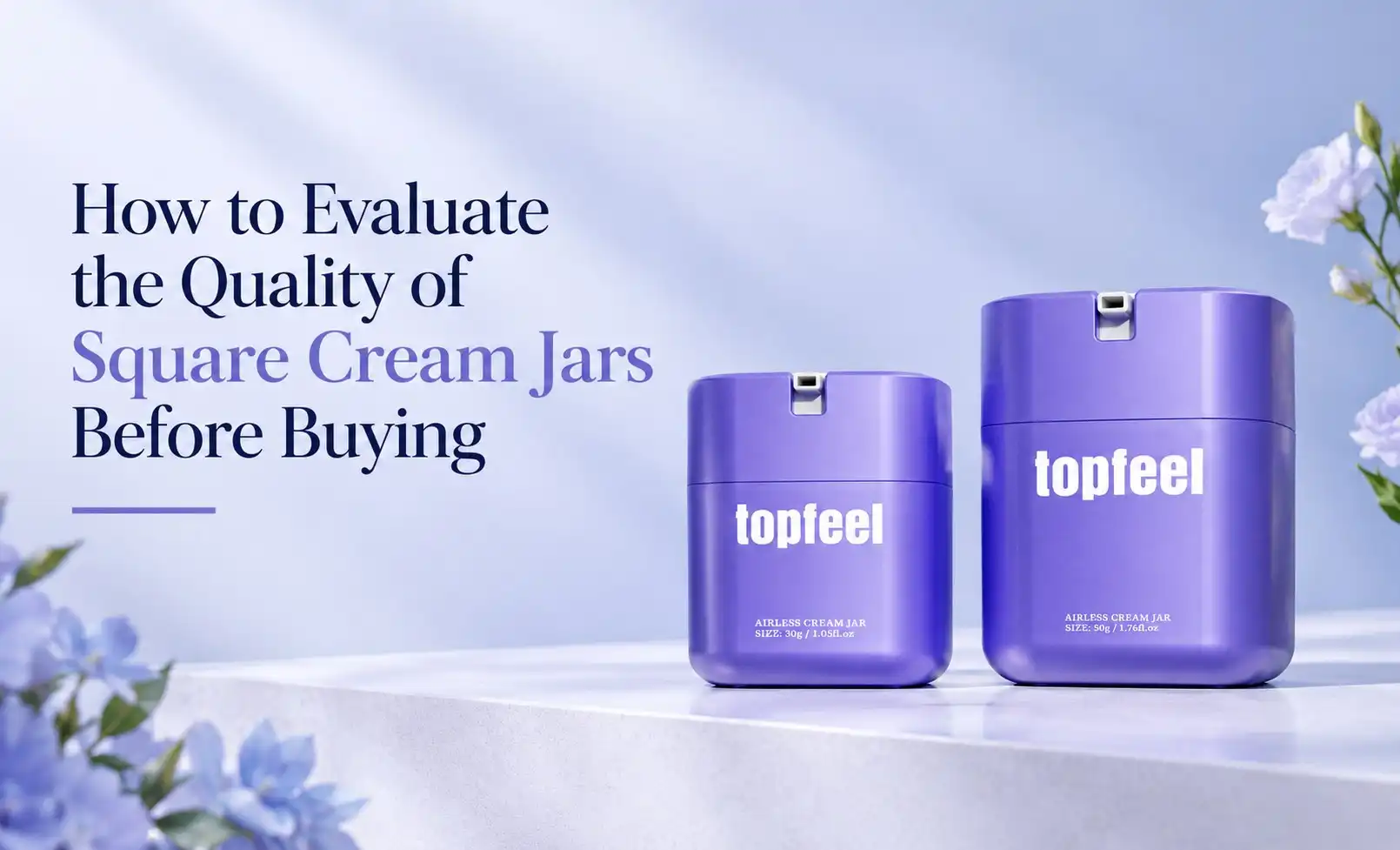
They are quite clear in the acrylic jars and look very beautiful. They give items a glittering depth, great for pricey moisturizers and eye gels, making them seem expensive on the shelf with their reflective qualities. The exterior is frosted PMMA walls and the interior is white glossy PP caps. This produces a clean appearance as in simple lines of skincare packaging and keeps the structure sturdy. PP is often used in inner cups and caps because to its chemical resistance and compatibility with a broad range of creams and gels.
Although glass is more heavy and more likely to shatter in shipment, it’s still the ideal solution for businesses that care about ecology and perceived value. PET is a more economical alternative to acrylic with equivalent clarity, and PCR (post-consumer recycled) options fulfill the environmental standards of EU REACH and CA Prop 65.
Lid Design and Seal Integrity
A well-made lid does more than just close the jar. It determines how long a product will last. Double-wall square structures with a black plastic outer cap, a white PP inner cap with liner, and a white PE disk cover protect against leaks in multiple layers, which is important for both water-based serums and oil-rich creams. Always make sure that the mechanism for closing stays sealed with a force that doesn't change between production runs.
Size, Capacity, and Logistics Fit
There are square cream jars with sizes running from 15ml to 50ml and beyond. Your landed cost per unit is directly affected by how well you match the jar amount to the formulation fill weight, the efficiency of the box packing, and the freight measurements. A 30ml jar that can fit 20% more units in a shipping carton than a round one is a real operational plus.
Systematic Approach to Inspecting Quality Before Purchase
A structured quality inspection process should be used for all relationships with suppliers. I suggest making a list with three parts: visible evaluation, functional testing, and confirmation of the paperwork.
Here are the main things that every buying team should look for during an inspection:
- Visual integrity inspection. Look for areas of equal wall thickness and check for sink marks, flash lines or cloudiness in acrylic panels. Discoloration is usually an indication of tainted source material or bad molding temperatures.
- Airtightness and leak test: Fill the jars with water or surrogate fluid, seal, invert and apply mild pressure. Any seepage shows poor lid clearances or warped sealing surfaces.
- Drop and stress test: Square cream jars undergo corner-edge stress during transportation. A good provider will have data on drop test performance at appropriate heights under ISTA or ASTM D4169 packaging requirements.
- Certification Review: Require COA (Certificate of Analysis), MSDS and FDA/REACH compliance papers before authorizing each manufacturing run. They are essential for marketing into the US or EU markets.
All of these checks work together to lower the chance of expensive product recalls, chargebacks by retailers, or damage to the brand from bad packaging in the field.
Identifying Root Causes of Common Defects
When acrylic jars become brittle, it's usually because they absorbed too much water while being molded or because too much recycled resin was used. Inconsistent cooling during the injection molding stage can cause lids to become warped. When you do supplier checks, you can ask better questions if you know about these root reasons.
Comparing Square Cream Jars: Making Informed Procurement Decisions
For firms that purchase beauty packaging, the argument of square vs round jars is a frequent one. Square cosmetic jars with flat side walls provide up to 30% extra printing surface space, ideal for brand storytelling, ingredient callouts or regulatory labeling. This is particularly true for functional skincare or Amazon DTC products, where the packaging is speaking directly to the client at the point of sale. While tighter closure methods may be more expensive, they help oxidation-sensitive items like as vitamin C creams and retinol balms remain longer on the market. Non-airtight may still be employed for water-resistant formulations or low-cost product lines when conserving money is more essential than maintaining freshness of the product.
Benchmarking Suppliers Against MOQ and Lead Time
Minimum order number (MOQ) flexibility is a real difference for new brands when comparing cream jar providers. Suppliers with MOQs below 3,000 units and trial response times of 7–15 days greatly lower the risk of developing a new product. Custom sample production at Topfeelpack takes 30–45 days, and mass production takes 3–5 weeks. These are both quick turnaround times that work with product launch schedules.
When setting prices, you should think about the total cost of ownership, which includes unit cost, tooling amortization, freight, and failure rate change. If the defect tolerance is more than 1.5%, a slightly lower price per unit quickly goes away.
How to Choose the Right Square Cream Jars for Your Business Needs?
Cream jars for high-end skin care brands need to look like they are made of high-quality materials. Double-wall plastic frames with electroplating, hot stamping, or gradient spray finishes are ideal for this. On the other hand, functional skincare brands put chemical compatibility, clean labeling space, and regulation paperwork ahead of a nice look.
When it comes to direct-to-consumer (DTC) brands that sell on Amazon or in their own stores, the unboxing experience and shelf difference are very important. A square jar with a wide mouth made of frosted PMMA and a simple shape works well for both clean branding and photos, which are both important for improving conversion rates in e-commerce settings.
Formulation compatibility is something that needs extra attention. Wide-mouth openings are needed for thick creams and body butters so they are easy to fill and use. Lighter gels or eye creams work better in jars with smaller necks that allow for more precise pouring geometry. Before increasing output, you should always ask for tests to see if the jar material is compatible with your recipe.
Customization Options That Strengthen Brand Identity
A plain cosmetic jar can become a brand asset with private labeling, silk screen printing, hot stamping, and matte or gloss coating. Topfeelpack's cutting-edge injection molding and surface treatment facilities allow for custom mold creation and specialty finishes, which lets brands get unique bottle shapes without having to pay a lot for tooling.
Case Studies: Successful B2B Procurement of High-Quality Square Cream Jars
A sustainable skin care brand that used PCR-based square cream jars needed packing that was compliant with EU REACH and still had the high-end look that their customers expected. By asking suppliers for COA paperwork and third-party testing of the materials, they made sure the plastic was pure and met their goals for lowering their carbon footprint without affecting how the products looked on the market.
A high-end cosmetics company that was releasing a new line of anti-aging creams wanted logo-printed jars with frosted acrylic bodies that were hot-stamped in gold. Working with a source who knew how to make cosmetic jars, they got approved models in two weeks, started mass production, and were ready to go on time. The pictures of them opening the boxes caused a noticeable rise in social sharing during the launch window.
Both of these examples show that getting good deals doesn't just mean choosing the cheapest unit price; it also means doing your research, talking to suppliers, and being strict with your paperwork.
Conclusion
You can protect your recipe, your brand, and your bottom line by checking the quality of the cream jar before you buy it. This is especially important for square cream jars, where corner geometry, lid fit and wall thickness all affect seal integrity, shelf appeal and long-term formula stability. The factors include material science, structure engineering, following the rules, and making sure the work looks good. Sourcing can be turned from a risk into a strategic advantage with a disciplined inspection process and reliable supplier documentation. Brands that put a lot of effort into carefully evaluating packaging before they buy it always do better than brands that don't think about packaging at all. Choosing a good cream jar isn't a one-time thing; it's something you do every time you buy something, and it builds brand value over time.
FAQ
1. What materials are best for square cream jars used in high-end skincare?
Acrylic (PMMA) and glass are the most common choices for premium skincare packaging. Acrylic delivers a high-clarity, sparkling aesthetic at lower weight than glass. For sustainability-focused brands, PCR acrylic or bio-based PP are viable alternatives that still satisfy luxury positioning.
2. How do I verify a supplier's compliance certifications remotely?
Request COA, MSDS, and REACH/FDA test reports directly. Cross-reference the testing lab names against accredited laboratory databases such as A2LA or ILAC. Reputable cosmetic jar manufacturers will provide these without hesitation and should welcome third-party audits.
3. Are eco-friendly square cream jars significantly more expensive?
PCR-based cream jars typically carry a 10–20% unit cost premium over virgin resin equivalents, depending on PCR content percentage and order volume. At larger MOQs, this gap narrows considerably. The long-term brand equity and regulatory compliance benefits often outweigh the initial cost differential for brands operating in the US or EU markets.
Partner With Topfeelpack for Premium Square Cream Jars
Topfeelpack is a trusted square cream jars supplier serving skincare and cosmetics brands globally. We offer rigorous quality control, eco-friendly material options, custom surface finishes, and flexible MOQs with 30–45 day production turnarounds. Whether you need a standard frosted jar or a fully bespoke design, our team is ready to support your next launch. Contact us at [email protected] to request samples or discuss your project specifications.
References
1. Selke, S., & Culter, J. — Plastics Packaging: Properties, Processing, Applications, and Regulations — Hanser Publications, 2016
2. European Chemicals Agency (ECHA) — REACH Regulation: Understanding the Basics — ECHA Publications, 2022
3. Cosmetic Ingredient Review (CIR) — Safety Assessment of Cosmetic Packaging Materials — CIR Annual Report, 2021
4. ASTM International — ASTM D4169: Standard Practice for Performance Testing of Shipping Containers and Systems — ASTM, 2022
5. Packaging Digest — Sustainability Trends in Cosmetic Rigid Packaging — Packaging Digest Industry Report, 2023
6. Beauty Packaging Magazine — Material Innovations in Prestige Skincare Packaging — Beauty Packaging, 2023

Looking for quality cosmetic packaging? Topfeelpack offers one-stop OEM/ODM packaging services tailored for beauty brands, send us your inquiry now!
 - 副本_1745399213966.webp)
TOPFEELPACK CO., LTD